
What an Operation and Maintenance Contract Should Include
An operation and maintenance contract sets out who keeps the systems of your building running, to what standard and at what cost. When the contract is clear, both sides know what was promised and can check that it was done. When it is vague, every fault becomes a discussion about who pays. This guide covers the clauses a building owner should look for before signing with an operation and maintenance company in Saudi Arabia.
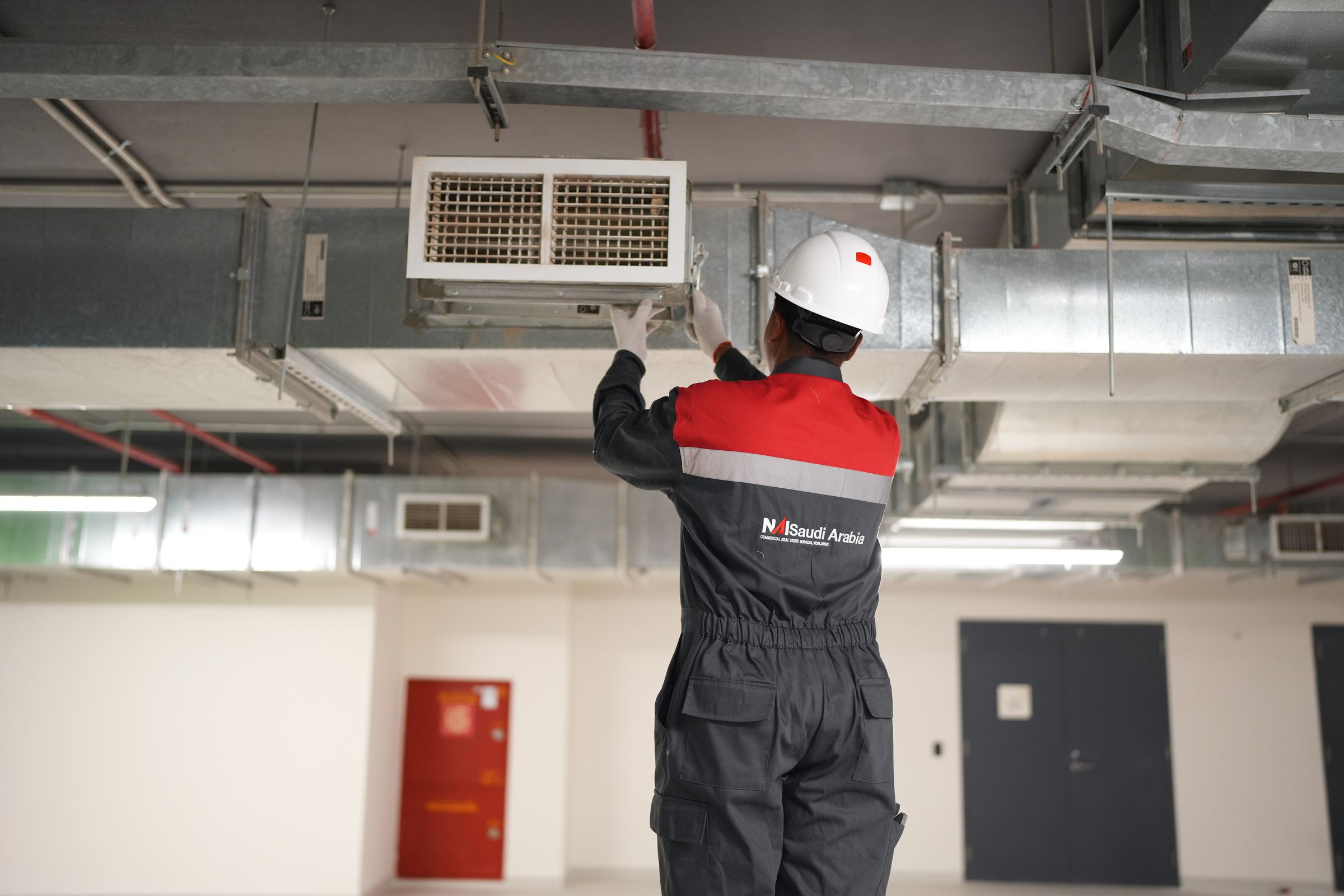
Operation and maintenance contract checklist
Use this table to read a draft contract. Each line is explained in the sections that follow.
| Clause | What the contract should state |
|---|---|
| Scope | The asset register, the systems covered and the exclusions |
| Operation | The daily duties: running the plant, readings, monitoring |
| Planned maintenance | The standard followed and the annual plan |
| Faults and emergencies | Priorities, response and completion times, hours of cover |
| Spare parts | What is included, who pays for the rest and how it is approved |
| Specialist systems | Who appoints and manages the manufacturers |
| Team | Roles, numbers, shifts and qualifications |
| Performance | The indicators, the monthly report and the link to payment |
| Start and end | The condition survey at the start and the handback at the end |
Scope: start with the asset list
The contract should rest on an asset register: every system and major piece of equipment, with its location. Attach the register to the contract as a schedule. If a system is outside the scope, say so in writing. Silence on a system is where most disagreements begin.
Describe operation as carefully as maintenance. Operation is the daily running of the building: starting and stopping plant to match the operating hours, taking readings, watching the building management system and adjusting settings as the seasons change. Many contracts give maintenance several pages and operation a single line, although operation is what the people in the building feel every day.
Maintenance: planned work, faults and emergencies
Planned preventive maintenance. Name the standard the schedule follows, such as SFG20 together with the manufacturers’ instructions. Attach the annual maintenance plan. Define what “completed” means: the checklist filled in, the readings recorded, the photos attached and the visit signed off. State how completion is measured each month.
Corrective maintenance. Define the priority levels in words, with examples from your own building. For each priority, state a response time and a completion time. Without both, a fault can be attended on time and still stay open for weeks.
Emergencies. State the hours of cover and how an emergency is reported outside working hours. Require that every call goes through one helpdesk and becomes a work order with recorded times. Service levels that are not recorded cannot be measured.
Spare parts, specialist systems and the team
Most disputes in operation and maintenance contracts are about materials. The contract should state:
- Which consumables are included in the monthly price.
- Who pays for spare parts, and the value above which your approval is needed.
- How a quotation is submitted and approved, and how quickly.
- Who holds the stock of critical spares, and who owns it.
For specialist systems such as lifts, fire systems and generators, state who appoints the manufacturer or specialist and who is responsible for its performance. One responsible party is easier to manage than several separate agreements. If the building is still under warranty, the contract should require that maintenance is done in a way that keeps the warranties valid.
Set out the team as well: the roles, the number on each shift, the qualifications required and how absences are covered. Add the safety requirements, including permits to work for every task that needs one.
Performance, reporting and payment
Choose a small number of indicators that can be measured from recorded data: planned maintenance completed against the plan, faults attended and closed within the agreed times, and repeat faults on the same equipment.
State what the monthly report contains and when it is due. Require a monthly review meeting. If payment is linked to performance, write the mechanism plainly, so that both sides can calculate it from the same records.
State also that the records belong to you. The asset register, the maintenance history and the test certificates are part of the building. The contract should give you access to them throughout and require their handover at the end.
Starting and ending the contract
A good contract deals with its first month and its last.
At the start, require a condition survey. It records the state of each system on the day the contractor takes over, and separates existing defects from failures that happen later under the contract. Agree how the existing defects will be handled and priced.
At the end, require a handback: equipment in the maintained condition, records complete, spares and keys returned, and cooperation with whoever takes over. An owner who writes this clause on day one avoids a difficult exit years later.
How NAI Saudi Arabia delivers operation and maintenance
Our hard services and maintenance work follows the structure described above. We survey your building and build the asset register on our platform. We create the maintenance schedule from SFG20 task libraries, matched to your assets, so our planned maintenance is in line with SFG20. Every visit is recorded with its checklist, readings and photos.
Faults are logged through our 24/7 FM helpdesk, prioritised by their impact on the building and tracked against the agreed service level. Lifts and escalators are maintained through their original manufacturers, whom we manage on your behalf. Each month you receive maintenance compliance, service levels and recommendations for repairs and replacements, supported by our asset management service. The steps we follow when we take over a building are set out in How we work.
If you are preparing an operation and maintenance contract for a building in Riyadh or Jeddah, we will survey the building and propose a scope and a maintenance plan for it.
About NAI Saudi Arabia
NAI Saudi Arabia is a leading total facilities management (TFM) and property management company in Saudi Arabia, and part of NAI Global, one of the world’s largest real estate services companies, with 350 offices, more than 45 years of experience and more than 102 million sqm of property under management for owners, occupiers and investors.
In Saudi Arabia, we have grown since 2024 to manage more than 250,000 sqm across 25+ commercial assets in Riyadh and Jeddah, for corporate occupiers, developers and financial institutions. We deliver hard services, soft services, specialist maintenance and property management, combining in-depth knowledge of the Saudi market with global expertise, so our clients receive services delivered to a consistently high standard.